Between what a business says and what a customer understands.
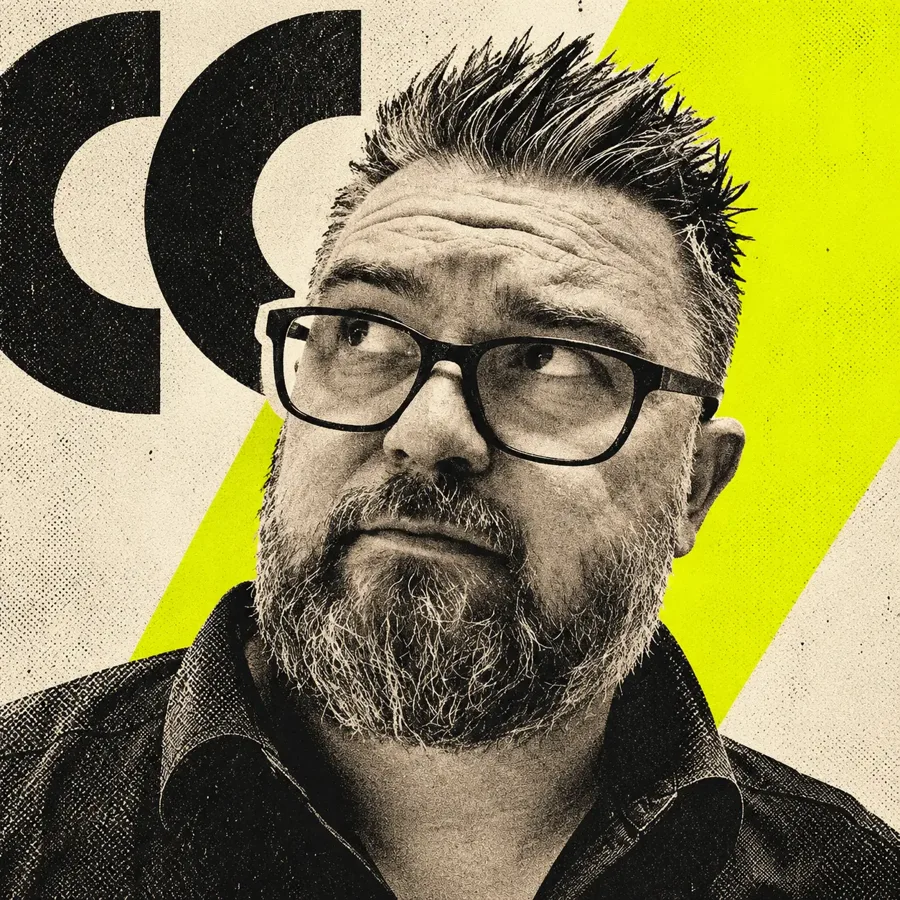
That gap is where Copy Cartel works.
A useful business can sound astonishingly useless on paper. The offer is there. The explanation has been through three departments and come out saying nothing.
We work out what a customer needs to understand, then write it plainly. What you do. Why it matters. Why someone should choose you. More advertising can wait until those questions have answers.
Most of my working life has been spent in retail and operations, not in an agency.
Shop floors, stock, teams, targets and customers who have somewhere else to be. That is where I learned how people actually buy: quickly, a little sceptically, and usually while doing three other things.
On the retail floor you have roughly fifteen seconds to earn someone's interest. Miss it, and they drift towards the door. Nobody hands you a stopwatch. You just learn it, one lost customer at a time.
Then I noticed the same thing happening on websites. A visitor arrives, glances at the headline and decides whether this is for them. Same fifteen seconds. No salesperson to rescue the moment.
Retail taught me about customers, attention and selling. Copywriting is how I put that to work.
That's the rabbit hole.
Along the way I became properly interested in why people communicate the way they do. Not just what words mean, but what they do: why one sentence earns trust and another makes you check your wallet.
That curiosity took me into linguistics. The useful part for clients is simple: I notice when a sentence says one thing and the reader hears another.
In advertising.
In boardrooms.
In customer complaints.
In LinkedIn posts.
In the increasingly elaborate ways businesses avoid simply saying what they mean.
I love this stuff.
I've always loved writing. After years of running parts of businesses and watching how people behave inside them, it became the clearest way of making sense of what I was seeing.
Copy Cartel is where that comes together: a working knowledge of customers and commerce, and a serious interest in language, applied to the words a business uses to sell.
Business taught me how things work.
Writing taught me how people talk about them.
Curiosity made me wonder why.
Copy Cartel sits somewhere in the middle.
We write.
We think.
We pull things apart.
We ask slightly inconvenient questions.
And occasionally we tell someone that their beautifully crafted paragraph is, in fact, saying absolutely nothing.
Usually for their own good.
I write about language, business, retail, human behaviour and whatever else catches my attention.
JACQUES ON LINKEDIN ↗What we believe.
- Clarity is not boring.
- Jargon is not strategy.
- Your customer doesn't care about your internal org chart.
- Sounding professional and sounding like a human are not opposites.
- Good copy doesn't need to shout.
- If everyone could have written it, it probably isn't your best work.
We don't start with words.
We start with the problem.
- Who are you talking to?
- What do they actually care about?
- What are you asking them to believe?
- What are you asking them to do?
- And what are you currently saying that nobody gives a shit about?
Then the writing comes afterwards.
Copywriting is applied psychology: how people read, decide, hesitate and act. Rearranging adjectives is the last step, not the job.
Why “the Cartel”?
Because “Copywriting Studio” sounded painfully respectable.
The Cartel is deliberately tongue-in-cheek. We're not interested in pretending marketing is more complicated than it is.
Good businesses need good ideas.
Good ideas need good words.
And good words need someone prepared to delete half of them.
That's the job.
Things we don't do.
- We don't write corporate fog.
- We don't invent urgency.
- We don't use “synergy” unless someone has a gun to our head.
- We don't make up customer insights because the slide deck needs one.
- We don't make you sound like every other company in your industry.
- We don't believe more words means more value.
The goal isn't to persuade people for the sake of persuasion. The goal is to make the right decision easier.